Proven way to grow 5 easy patio gardening plants
Have you ever gazed at your empty patio or balcony and dreamed of transforming it into a lush, green oasis? With the rising trend of urban living and shrinking outdoor spaces, patio gardening has emerged as a perfect solution for nature-starved city dwellers. This versatile approach to gardening allows anyone regardless of space constraints to create vibrant, personalized outdoor retreats.
When combined with the flexibility of container gardening, even the smallest balcony or patio can become a flourishing botanical showcase that reflects your personal style while bringing the therapeutic benefits of nature right to your doorstep.
Table of Contents
Design Concept Overview
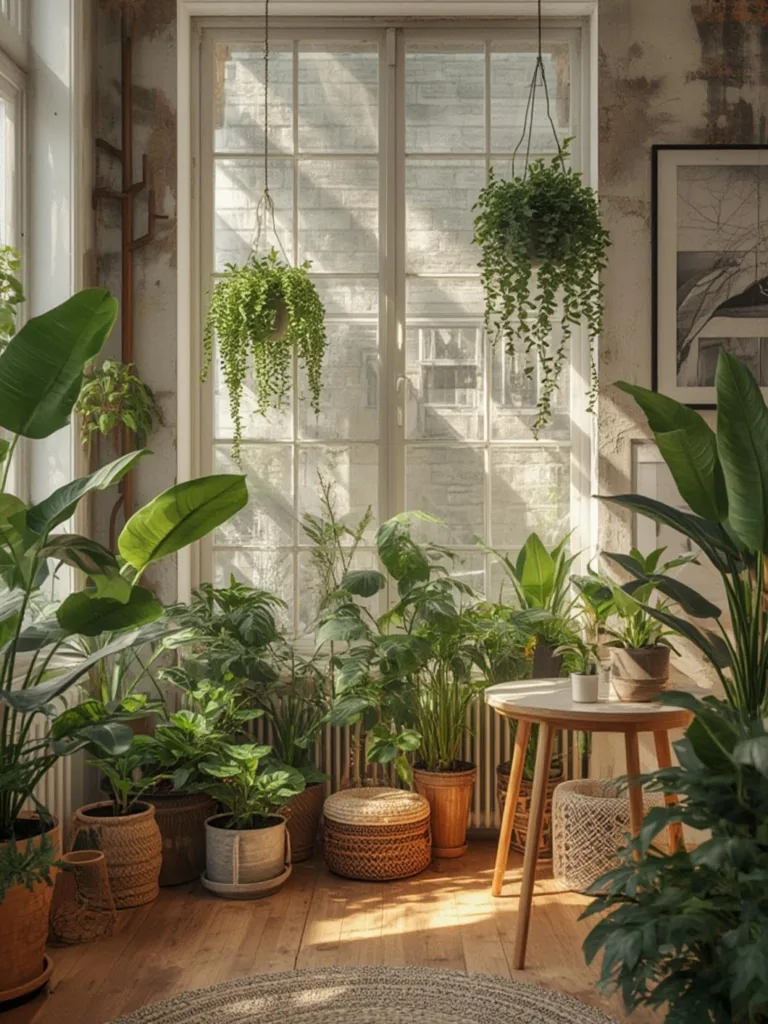
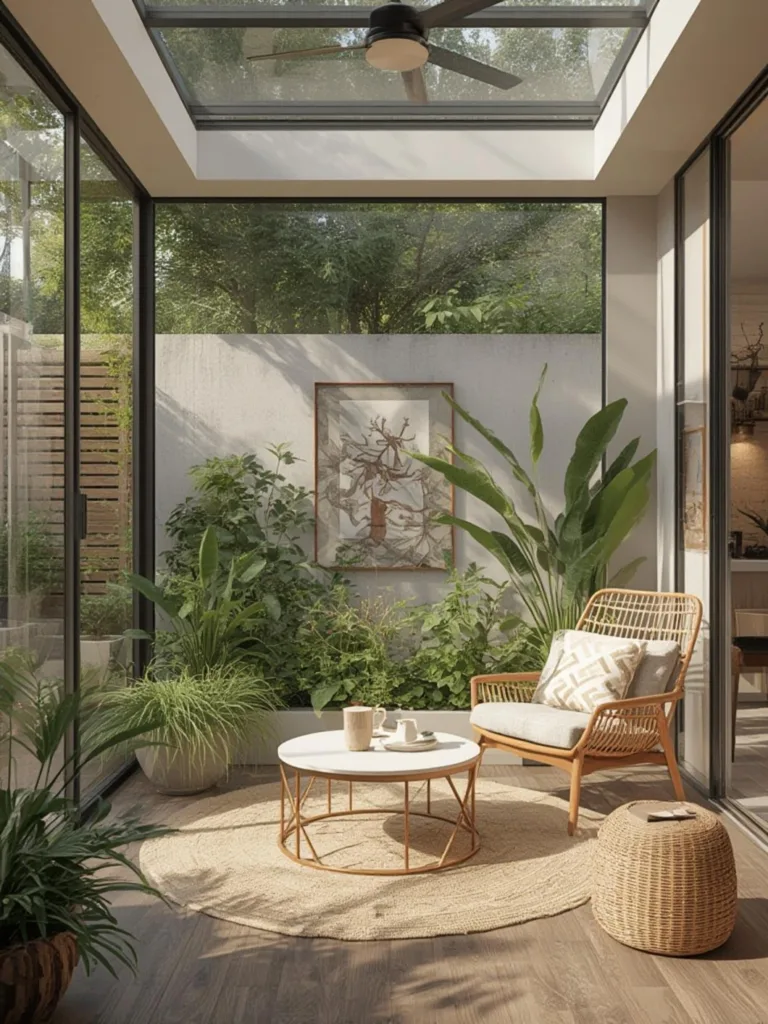
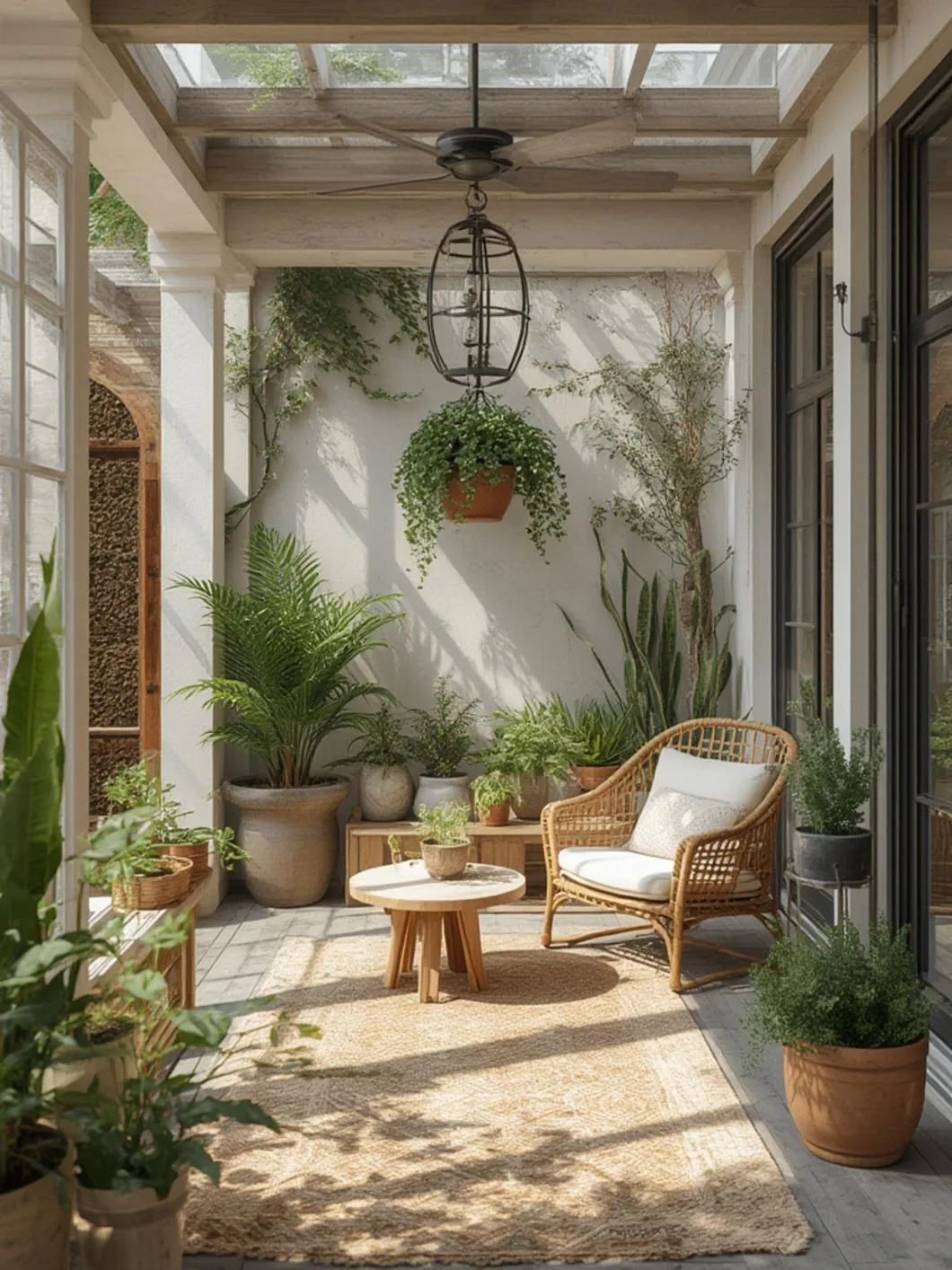
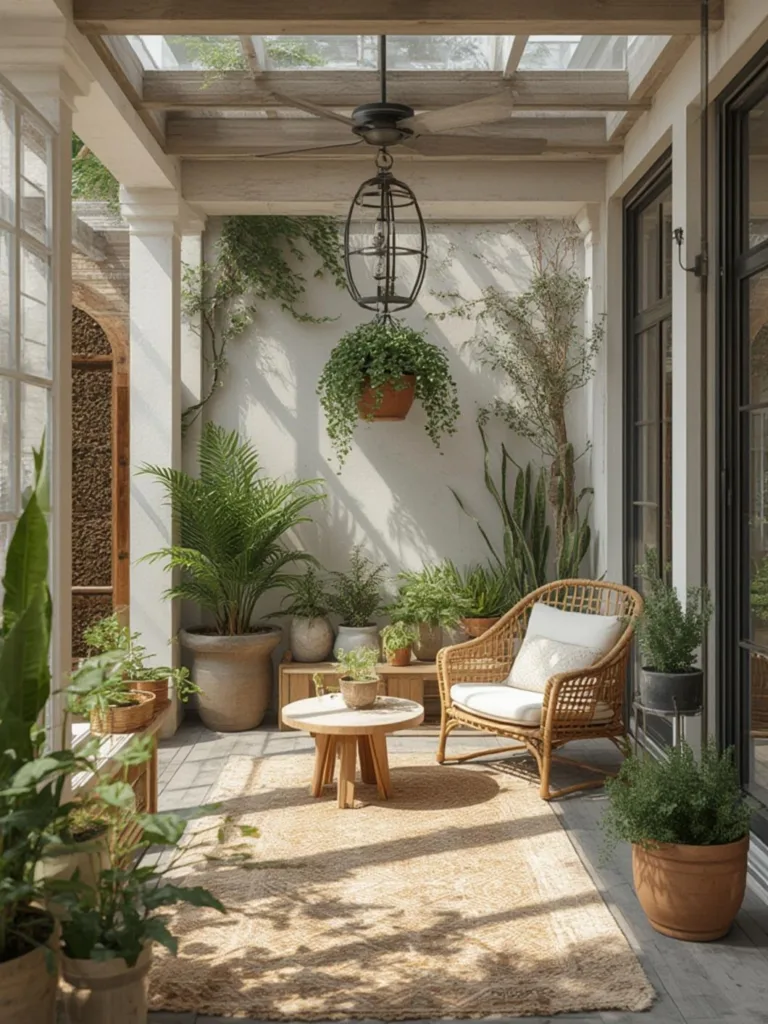
Patio container gardens represent the perfect fusion of horticulture and interior design principles. The core concept revolves around creating a cohesive outdoor room where plants become the starring design elements. Unlike traditional gardens, patio container designs emphasize vertical space utilization, layered compositions, and strategic plant groupings.
The style possibilities are virtually endless from minimalist Zen-inspired arrangements featuring a restrained palette of greens and natural materials to vibrant Mediterranean-inspired spaces bursting with colorful flowers and terracotta pots. The design language can lean contemporary with sleek, geometric planters and architectural foliage, or embrace cottage-garden charm with weathered containers and billowing flowers.
This approach works exceptionally well in urban apartments, townhouses, rooftop terraces, and small suburban homes where ground planting space is limited but the desire for greenery remains strong.
Materials, Colors & Key Elements
Essential Materials:
– Containers: Terracotta, ceramic, metal, wood, concrete, fiberglass, or recycled materials
– Quality potting mix (not garden soil)
– Slow-release fertilizer
– Watering can or irrigation system
– Plants suited to your climate and light conditions
– Drainage materials (pebbles, broken pottery pieces)
– Mulch for moisture retention
– Plant supports for climbers or tall specimens
Color Palettes:
– Monochromatic: Various shades of green for a calm, cohesive look
– Complementary: Purple and yellow, blue and orange, or red and green for vibrant contrast
– Analogous: Neighboring colors on the color wheel (yellows, oranges, and reds) for harmonious flow
– Seasonal: Pastels for spring, bold colors for summer, rich tones for fall
Key Elements:
– Thriller plants: Tall, structural focal points (ornamental grasses, small trees)
– Filler plants: Mid-height, bushy plants for volume (flowering perennials, herbs)
– Spiller plants: Cascading varieties to soften edges (ivy, petunias, trailing succulents)
– Hardscape accents: Trellises, small water features, decorative stones
– Lighting: Solar stakes, string lights, lanterns for evening ambiance
Budget-friendly alternatives include repurposing household items as containers (tin cans, buckets, wooden crates), propagating plants from cuttings, and shopping end-of-season sales.
Timing, Budget & Planning
Budget Considerations:
– Starter budget: $100-300 for a small patio (4-6 containers, basic plants, soil, and tools)
– Mid-range: $300-700 for a medium patio (10-15 containers, variety of plants, some specialty specimens)
– Premium: $700+ for large patios or designer looks (high-end containers, mature specimens, automated irrigation)
Planning Timeline:
– Research & design: 2-4 weeks (determining light patterns, choosing plant combinations)
– Container acquisition: 1-2 weeks
– Planting process: 1-2 days
– Establishment period: 2-4 weeks for plants to settle and begin thriving
Space Adaptations:
– Micro-patios (under 50 sq ft): Focus on vertical gardening, wall planters, and railing boxes
– Small patios (50-100 sq ft): Create distinct zones with 1-2 larger statement containers surrounded by smaller ones
– Medium patios (100-200 sq ft): Incorporate seating areas integrated with plant groupings
– Large patios (200+ sq ft): Design “garden rooms” with different themes or color schemes
For budget-conscious projects, start with a few high-impact containers and expand gradually. Prioritize perennial plants that will return year after year, and incorporate affordable annuals for seasonal color.
Step-by-Step Guide
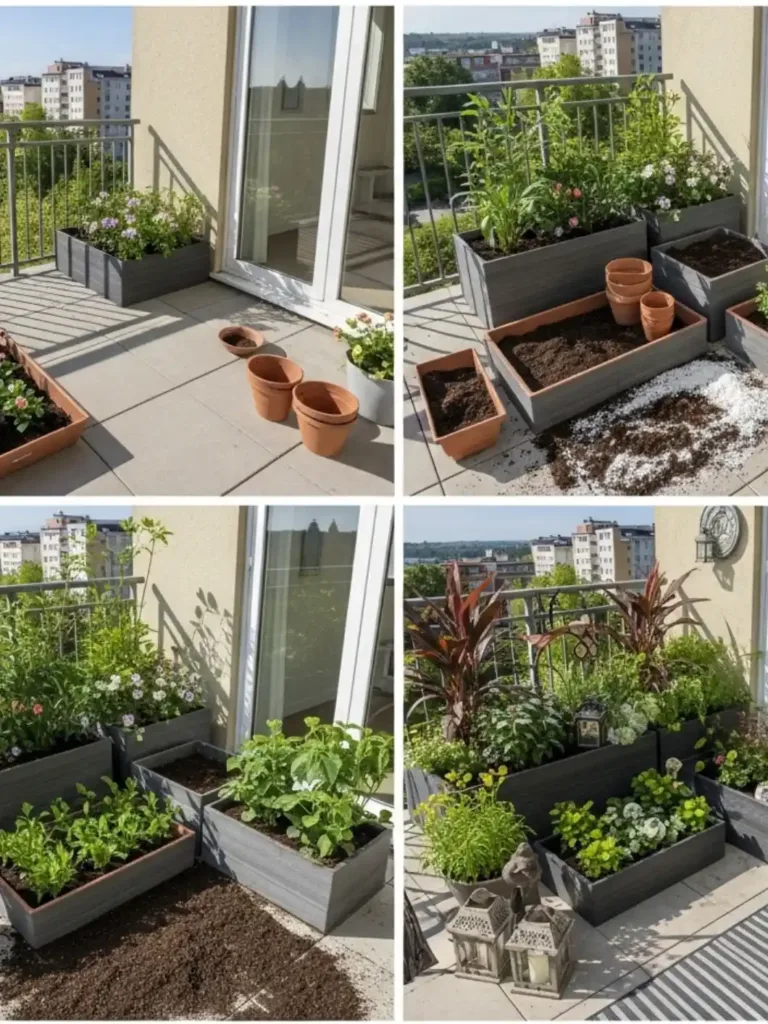
1. Assess Your Space
– Map out your patio’s dimensions
– Identify sun exposure patterns (full sun, partial shade, full shade)
– Note microclimates and wind conditions
– Consider views from both inside and outside
2. Create a Design Plan
– Determine your style direction and color palette
– Plan traffic flow and functional zones (dining, relaxing, growing)
– Sketch container arrangements considering height, width, and visual balance
3. Select Your Containers
– Choose appropriately sized pots (larger containers require less watering and provide more root space)
– Ensure adequate drainage holes
– Consider weight if your patio has structural limitations
– Create cohesion through coordinating colors or materials
4. Prepare Your Containers
– Add drainage material to container bottoms
– Fill with high-quality potting mix designed for container gardening
– Incorporate slow-release fertilizer into the soil
5. Select and Arrange Plants
– Choose plants suited to your light conditions and hardiness zone
– Follow the “thriller, filler, spiller” formula for dynamic compositions
– Consider growth habits and mature sizes
– Group plants with similar water requirements
6. Planting Technique
– Remove plants from nursery containers carefully
– Tease root-bound plants gently to encourage outward growth
– Position plants at the same depth as they were in their nursery pots
– Leave 1-2 inches of space below the pot rim for watering
7. Establish a Maintenance Routine
– Water thoroughly after planting
– Create a watering schedule based on your climate and container sizes
– Plan for regular feeding every 2-4 weeks during growing season
– Schedule seasonal maintenance (pruning, dividing, replanting)
8. Layer in Finishing Touches
– Add mulch to reduce moisture loss
– Install support structures for climbing plants
– Incorporate decorative elements like pebbles or small ornaments
– Install lighting for evening enjoyment of your patio gardening masterpiece
Benefits & Functional Advantages
Patio container gardens deliver numerous practical and aesthetic advantages that extend well beyond their decorative appeal:
– Space Maximization: Utilize vertical space and awkward corners that would otherwise go unused
– Mobility: Rearrange containers seasonally to optimize sun exposure or create new looks
– Microclimate Control: Move sensitive plants to sheltered areas during extreme weather
– Soil Quality Management: Complete control over soil composition for optimal plant health
– Accessibility: Raised containers reduce bending and kneeling, ideal for those with mobility limitations
– Pest Management: Easier to monitor and control pests and diseases in contained environments
– Property Protection: Prevent aggressive root systems from damaging foundations or paving
– Privacy Enhancement: Strategic placement of taller planters creates natural screens
– Microclimate Improvement: Plants cool surrounding air through transpiration
– Property Value: Well-designed container gardens enhance curb appeal and outdoor living spaces
Alternative Styles & Customization Ideas
Style Variations:
– Minimalist Zen: Limited plant palette, natural materials, emphasis on form over color
– Tropical Paradise: Bold foliage, vibrant flowers, exotic specimens, colorful containers
– Cottage Garden: Abundant flowers, mix-and-match containers, informal arrangements
– Modern Urban: Architectural plants, geometric containers, monochromatic scheme
– Edible Landscape: Ornamental vegetables, herbs, and fruits in attractive containers
Specialized Approaches:
– Vertical Gardens: Wall-mounted systems, tiered planters, trellises for climbers
– Themed Collections: Butterfly gardens, succulent displays, herb spirals
– Seasonal Showcases: Container designs that evolve through spring, summer, fall, and winter
– Water-Wise Gardens: Drought-tolerant plant selections, water-retention strategies
– Children’s Gardens: Sensory plants, edibles, whimsical containers, fairy garden elements
Small Space Solutions:
– Rail planters that attach securely to balcony railings
– Stackable or tiered planters to maximize vertical growing space
– Hanging baskets to utilize overhead space
– Window boxes for ultra-small patios or window ledges
– Furniture with integrated planters for dual functionality
Common Mistakes to Avoid
1. Undersized Containers
– Problem: Tiny pots dry out quickly and restrict root growth
– Solution: Choose containers at least 12 inches in diameter for most plants; go larger for shrubs and trees
2. Improper Drainage
– Problem: Waterlogged soil leads to root rot and plant death
– Solution: Ensure adequate drainage holes and elevate containers slightly with pot feet
3. Using Garden Soil in Containers
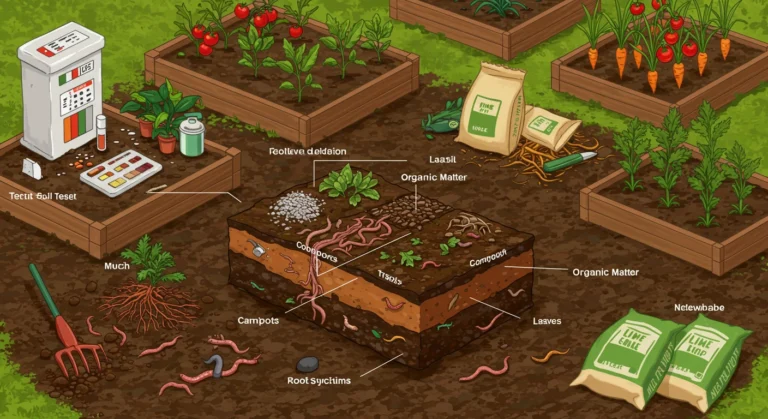
– Problem: Garden soil compacts in containers, restricting oxygen to roots
– Solution: Always use quality potting mix specifically formulated for containers
4. Overcrowding Plants
– Problem: Reduced air circulation increases disease risk; plants compete for nutrients
– Solution: Follow spacing recommendations and be willing to thin as plants grow
5. Ignoring Light Requirements
– Problem: Sun-loving plants in shade (or vice versa) perform poorly
– Solution: Map your patio’s sun patterns before placing plants
6. Inconsistent Watering
– Problem: Stress from drought/flood cycles weakens plants
– Solution: Develop a consistent watering routine based on weather conditions and plant needs
7. Forgetting About Winter
– Problem: Cold temperatures damage containers and kill tender plants
– Solution: Choose frost-resistant containers and plan for plant protection or replacement
8. Neglecting Fertilization
– Problem: Limited soil volume means nutrients deplete quickly
– Solution: Establish a regular fertilizing schedule appropriate to your plants’ needs
Maintenance & Longevity Tips
Seasonal Maintenance Calendar:
Spring:
– Refresh potting mix in permanent containers
– Prune dead or damaged growth from perennials
– Apply slow-release fertilizer
– Clean and repair containers
Summer:
– Increase watering frequency during heat waves
– Deadhead flowers to encourage continuous blooming
– Check for pests weekly
– Rotate containers for even growth if plants lean toward light
Fall:
– Reduce fertilization as growth slows
– Begin transitioning tender perennials indoors
– Plant fall-blooming species
– Clean and store summer-specific containers
Winter:
– Move vulnerable containers to protected locations
– Insulate roots with bubble wrap or burlap
– Reduce watering frequency
– Plan next year’s container designs
Long-term Care Strategies:
– Repot perennial plants every 2-3 years
– Disinfect containers between plantings
– Invest in quality potting mix rather than reusing old soil
– Install drip irrigation systems for consistent watering
– Use pot saucers that can be emptied to prevent root rot
– Apply protective sealants to wooden containers annually
Conclusion
Creating a patio container garden offers an accessible entry point into the world of gardening while delivering impressive visual impact and functional benefits. By following the principles outlined in this guide, you can transform even the smallest outdoor space into a personalized green retreat that evolves with the seasons. The versatility of patio gardening allows for endless creativity and expression, adapting to your changing tastes and lifestyle needs.
Whether you’re growing ornamentals for beauty, herbs for cooking, or vegetables for sustainability, container gardening offers solutions for every space constraint and design preference. We encourage you to start small, experiment freely, and watch as your outdoor living area transforms into a vibrant extension of your home’s interior design one beautiful container at a time.
FAQs
How often should I water my patio container garden?
Most container plants need watering when the top inch of soil feels dry to the touch. During hot summer months, this might mean daily watering for smaller containers and every 2-3 days for larger ones. Always check with your finger rather than following a rigid schedule, as climate, container material, and plant type all affect water needs.
Can I grow vegetables in containers on my patio?
Absolutely! Many vegetables thrive in containers, including tomatoes, peppers, lettuce, herbs, and even compact varieties of zucchini and cucumbers. Choose dwarf or bush varieties specifically developed for containers, ensure at least 6-8 hours of sun for fruiting vegetables, and use containers at least 12 inches deep with excellent drainage.
How do I winterize my patio container garden?
For cold climates, move tender perennials indoors, insulate remaining containers with bubble wrap or burlap, elevate pots on feet to prevent freezing to surfaces, and reduce watering. Choose frost-resistant containers made of fiberglass, heavy plastic, or metals rather than terracotta, which can crack in freezing temperatures.
What are the best plants for a full-sun patio that’s often windy?
For challenging sunny, windy locations, choose tough, drought-tolerant plants with small or leathery leaves like lavender, rosemary, sedums, ornamental grasses, and succulents. Use heavier containers that won’t topple, position larger plants to shelter smaller ones, and consider windbreaks like decorative screens for sensitive specimens.
How can I create privacy with my container garden?
Create effective privacy screens by using tall, narrow containers with columnar plants like arborvitae, bamboo, or ornamental grasses. Layer containers on stands of different heights, incorporate trellises for climbing plants like jasmine or clematis, and arrange containers to form a staggered barrier rather than a straight line for greater depth and interest.