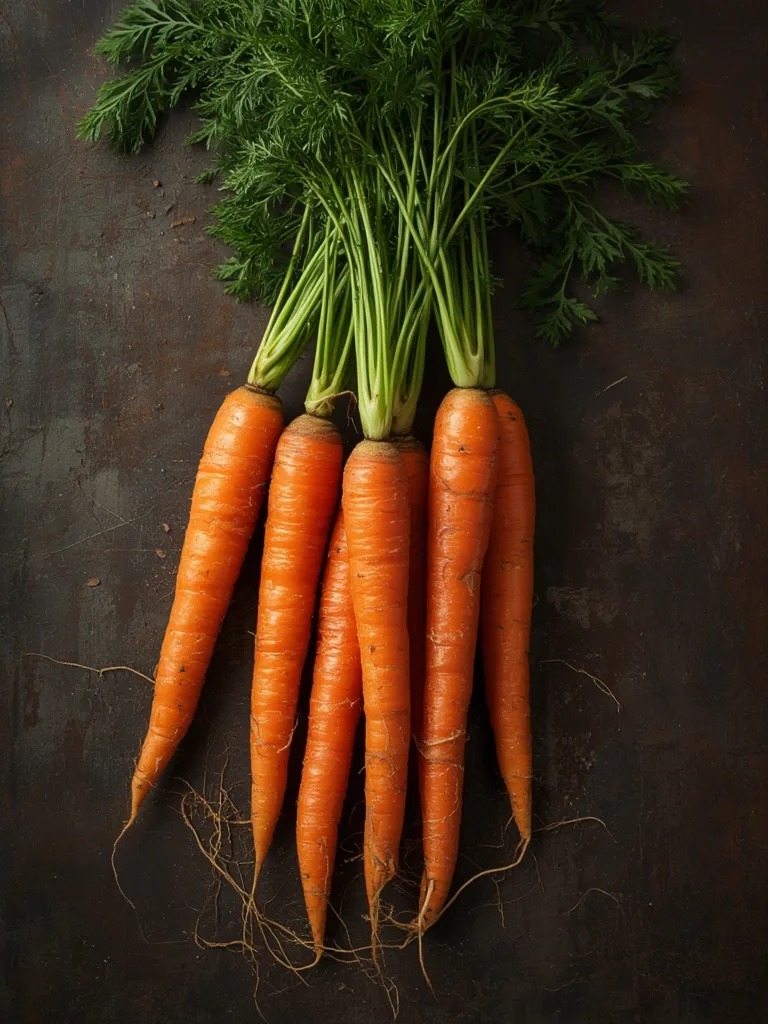
5 Bright Carrot Secrets for Bigger Yields
Have you ever pulled a stunted, malformed carrot from your garden and wondered what went wrong? Growing perfect carrots at home might seem challenging, but with the right techniques, you can harvest crisp, sweet roots that outshine anything from the grocery store.
Home-grown orange carrots not only taste better but also provide superior nutrition without pesticides or plastic packaging. Whether you’re an experienced gardener or just starting out, these five secrets will revolutionize your orange root rowing success and give you impressive yields that will make your neighbors green with envy.
Table of Contents
Materials & Supplies
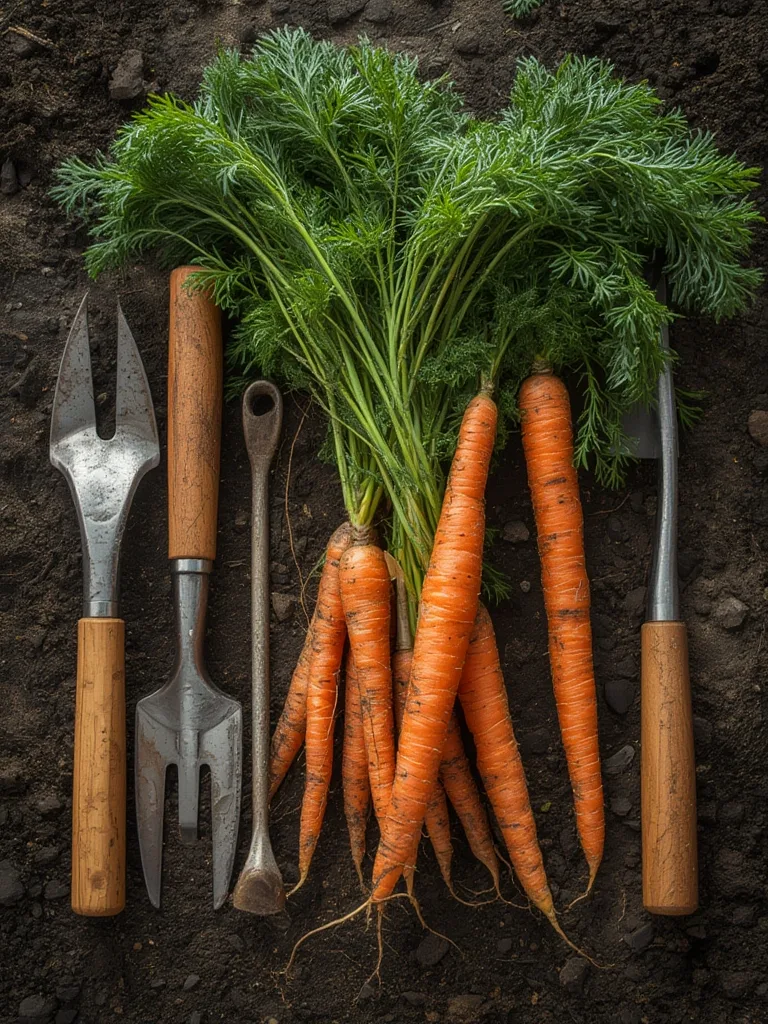
To grow abundant carrots, you’ll need:
- Quality carrot seeds: Choose varieties suitable for your climate (Nantes, Danvers, or Chantenay are reliable options)
- Well-draining soil: Sandy loam is ideal; avoid clay-heavy soils
- Compost or organic matter: To improve soil structure and nutrition
- Garden fork or tiller: For loosening soil deeply
- Fine-mesh sieve: For preparing a smooth seedbed
- Watering can with fine rose attachment: For gentle watering
- Row markers: To track planting locations
- Organic fertilizer: Low in nitrogen, higher in potassium and phosphorus
- Mulch materials: Straw or leaf mold work well
- Garden scissors or clippers: For thinning seedlings
Optional items include a soil pH tester (aim for 6.0-7.0), row covers for pest protection, and a garden hoe for weeding.
Timing / Growing Schedule
Carrots typically require 70-80 days from seed to harvest, though this varies by variety. Start seeds outdoors 2-3 weeks before the last spring frost for summer harvests, or plant in mid-to-late summer for fall harvests. Preparation takes about 2 hours for soil work and sowing, with 10-15 minutes of maintenance weekly. Compared to fast-growing radishes (30 days), this orange root require more patience but offer greater rewards.
Step-by-Step Instructions
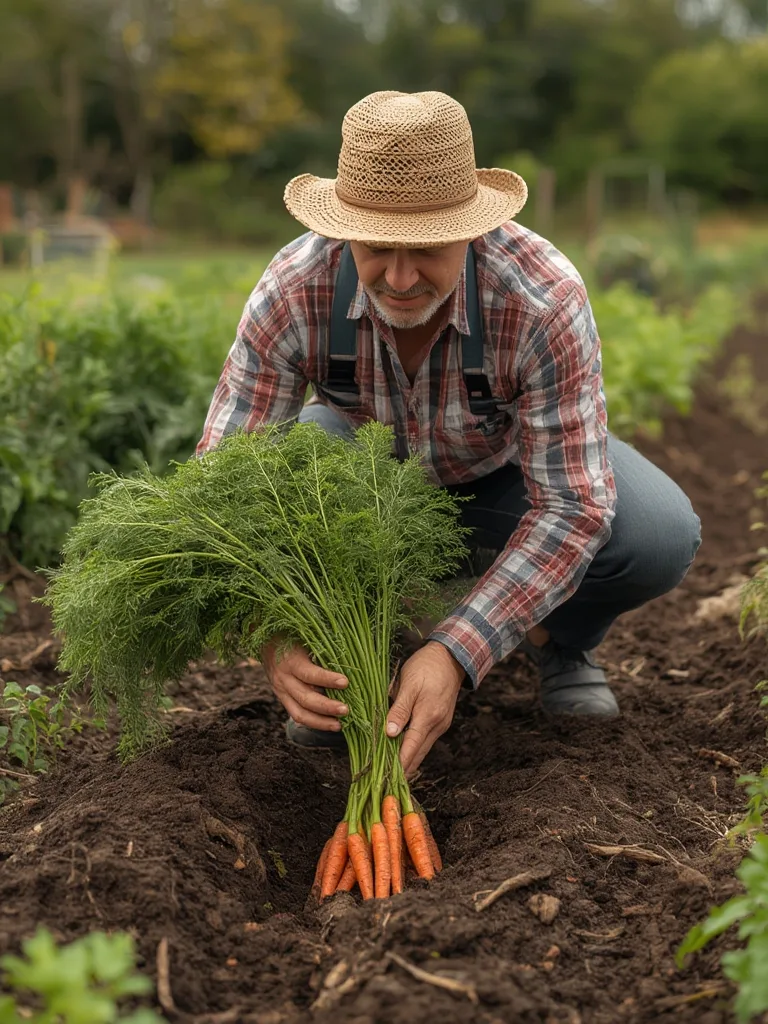
Prepare deeply loosened soil: Dig and loosen soil to at least 12 inches deep, removing all rocks and breaking up clumps. This allows straight root growth without forking.
Create a fine seedbed: Sift the top 2 inches of soil to create a smooth, stone-free layer. This prevents seedling obstruction and improves germination.
Sow seeds precisely: Mix seeds with fine sand (1:4 ratio) to distribute them evenly. Plant just ¼ inch deep in rows 12 inches apart, then gently press soil.
Water carefully: Use a fine mist or rose attachment to avoid washing away seeds. Keep soil consistently moist until germination (7-21 days).
Thin progressively: When seedlings reach 1 inch tall, thin to 1 inch apart; when 3 inches tall, thin again to 3 inches apart. Cut unwanted seedlings rather than pulling to avoid disturbing neighboring roots.
Nutritional Benefits
Home-grown carrots contain significantly higher levels of beta-carotene and antioxidants than store-bought versions. Just one medium orange root provides 210% of your daily vitamin A requirement, supports eye health, boosts immune function, and provides dietary fiber. Fresh-picked orange root also retain more nutrients, as vitamin content begins declining immediately after harvest.
Tips and Alternative Methods
For container growing, choose shorter varieties like ‘Paris Market’ or ‘Thumbelina’ in pots at least 12 inches deep. In heavy clay soils, consider raised beds with imported sandy loam. For continuous harvests, succession plant every 2-3 weeks. In hot climates, provide afternoon shade and extra water during summer. Companion plant with onions, leeks, or rosemary to deter carrot flies.
Common Mistakes to Avoid
- Overwatering: Causes splitting roots; maintain even moisture instead of sporadic soaking
- Overcrowding: Leads to stunted growth; thin ruthlessly for proper spacing
- High-nitrogen fertilizers: Promotes lush tops but forked roots; use balanced or low-nitrogen options
- Stony soil: Results in misshapen carrots; remove all rocks before planting
- Premature harvesting: Patience yields sweeter, larger orange root; check size by brushing away soil at shoulder
Storage / Maintenance Tips
For optimal storage, brush off soil (don’t wash), remove tops, and store in perforated plastic bags in the refrigerator crisper for 2-3 months. Alternatively, store in boxes of damp sand in a cool cellar. For garden maintenance, water consistently (1 inch weekly), avoid over-fertilizing, mulch to maintain moisture and suppress weeds, and hill soil around exposed shoulders to prevent greening.
FAQs
Why are my carrots forking and growing with multiple roots?
Forking typically results from rocky soil, recent manure application, or root nematodes. Prepare soil thoroughly, use only well-rotted compost, and practice crop rotation to prevent these issues.
Can I grow carrots year-round?
In zones 8-10, yes, with proper variety selection. In colder regions, use season extension techniques like cold frames or grow indoor varieties in deep containers.
How do I know when my carrots are ready to harvest?
Check the diameter at soil level most varieties are ready when the shoulders reach 3/4 to 1 inch across. The color should be vibrant, and tops should be healthy and full.
Is it true that carrots improve eyesight?
While carrots won’t correct existing vision problems, their high vitamin A content is essential for maintaining eye health and night vision. Regular consumption supports overall eye function.
Conclusion
Growing perfect carrots requires attention to soil preparation, proper spacing, and consistent care, but the superior flavor and nutrition make the effort worthwhile. The satisfaction of pulling a crisp, sweet carrot from your own garden simply can’t be matched by store-bought alternatives. Try implementing these five secrets this growing season and watch your carrot patch transform. We’d love to hear about your carrot-growing triumphs, share your results in the comments below!